


Eyewitness Describes Central Park Lightning Strike on Teenager

NEW YORK — "It was an immediate, terrifying flash, a sound like a cannon, and then he just dropped," recounted Maria Sanchez, an eyewitness to a lightning strike that critically injured a teenager in Central Park on August 12, 2026. The incident, which occurred during a sudden and severe thunderstorm, has raised urgent questions about public safety during adverse weather conditions.
The 17-year-old male, whose identity has not been released, was reportedly seeking shelter under a tree near the Pond at the park's southeast corner when the lightning struck. Emergency responders transported him to NewYork-Presbyterian Hospital in critical but stable condition, according to the FDNY.
The Sudden Storm and Tragic Incident
The afternoon of August 12 saw clear skies quickly give way to a fast-moving storm system, bringing heavy rain and intense lightning activity. Forecasters had issued a severe thunderstorm warning for New York City just minutes before the strike.
The teenager was with a group of friends near the Gapstow Bridge when the downpour began, prompting them to seek cover under a large oak tree. This decision, unfortunately, placed him directly in harm's way, illustrating the dangers of seeking shelter under trees during lightning storms.
Emergency Response and Medical Care
Bystanders immediately called 911, and quick-thinking individuals began administering first aid until paramedics arrived. The FDNY reported an incredibly rapid response time, with units arriving on scene within five minutes of the initial call, highlighting their efficiency in park emergencies.
"Every second counts in these situations," stated Captain Alex Rivera of FDNY Engine Company 23. "The initial actions of the public, combined with our rapid deployment, played a critical role in providing immediate care to the victim."
Park Safety Protocols During Storms
Central Park Conservancy officials expressed their deep concern over the incident and reiterated existing park safety protocols during thunderstorms. These protocols advise visitors to seek substantial shelter in buildings, such as the Central Park Dairy or the Metropolitan Museum of Art, and to avoid open areas, high ground, and especially trees.
"We consistently issue warnings and guidance about lightning safety, particularly during the summer months," commented Thomas Vance, Central Park Conservancy's Head of Visitor Services. "This tragic event is a stark reminder that even a brief storm can pose serious risks." Visitors can check park alerts for weather-related closures.
Broader Implications for Urban Green Spaces
The lightning strike in Central Park underscores the challenges of ensuring public safety in large urban green spaces, which can quickly become hazardous during severe weather. City officials are reviewing communication strategies for urgent weather alerts within parks.
Consideration is being given to implementing enhanced digital signage at park entrances and utilizing geo-targeted mobile alerts for visitors within the park boundaries during severe weather events. This proactive approach could significantly improve safety responses.
Community Support and Recovery
News of the teenager's injury spread quickly through social media, prompting an outpouring of support from the community. Local residents and park advocates have offered wishes for his speedy recovery and have initiated discussions on how to better educate the public about storm safety.
The incident serves as a solemn reminder of nature's unpredictable power within the urban landscape of New York City. Ongoing updates regarding the teenager's condition are expected from the hospital and his family, who have requested privacy during this difficult time.
Frequently Asked Questions About Lightning Safety in Central Park
Many people wonder where the safest places are in Central Park during a thunderstorm. The safest locations are inside fully enclosed buildings with plumbing and wiring, such as the many visitor centers or surrounding museums. Cars with metal roofs and closed windows also offer good protection, but convertible tops provide no safety. Open-air structures like pavilions offer minimal protection.
Another common question is about how quickly one should react to a storm. Experts advise that if you hear thunder, lightning is close enough to strike. It is best to seek safe shelter immediately, rather than waiting for the storm to intensify. The '30/30 rule' suggests waiting 30 minutes after the last thunder before resuming outdoor activities. For general news and wider commentary on Central Park incidents, you can refer to The Independent's dedicated coverage.
Related Articles
More in Weather & Health →
Central Park Radar Shows Current Rain Conditions and Near-Term Updates
Central Park visitors are seeing current rain conditions and near-term precipitation updates on AccuWeather radar, affecting outdoor activities and park operations.

September 2026 Central Park Weather Forecast Reveals Mild Conditions
Central Park's September 2026 weather forecast projects mild daily highs between 70-82°F and lows 57-66°F. Plan outdoor activities; comfortable conditions expected for park visitors.
Central Park Visitors Face Intermittent Rain, Cooler Temps Sunday Night
Central Park experienced cool temperatures and intermittent rain on Sunday, September 27, 2026, with a temperature of 57.0°F recorded. Visitors should plan accordingly.
Central Park Records 72°F Max, 58°F Min Temperatures September 27
Central Park observed a maximum temperature of 72°F and minimum of 58°F on Sunday, September 27, 2026, according to the NWS climatological report.
AccuWeather Forecasts 64°F, 59°F for Central Park September 27
AccuWeather forecast a high of 64°F and low of 59°F for Central Park on September 27, 2026, slightly below monthly averages, indicating a cooler day.
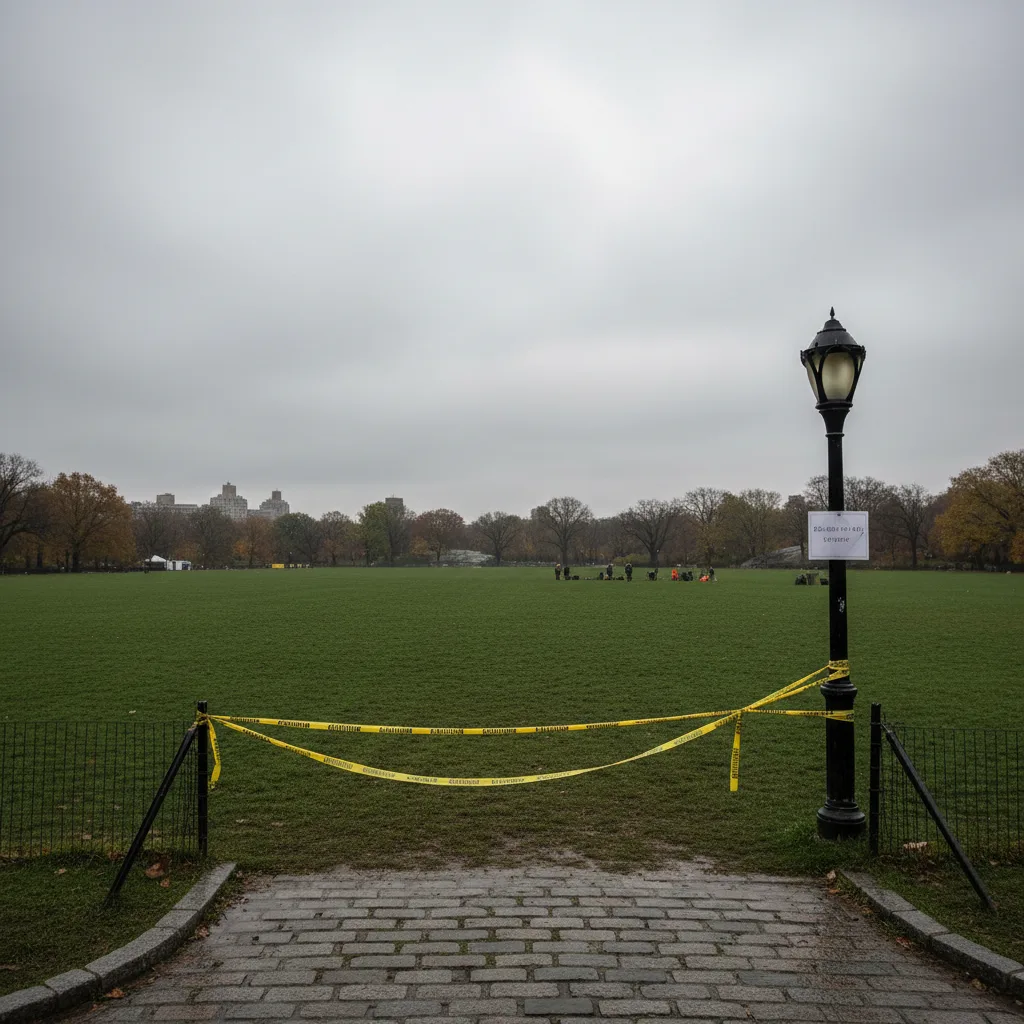
Global Citizen Festival in Central Park Canceled Due to Nor'easter Threat
Global Citizen Festival in Central Park was canceled Thursday due to an approaching nor'easter, affecting thousands and prompting safety concerns. New Yorkers should check for updated park alerts and traffic changes related to the storm.