


Meteorologist John Elliott Confirms Central Park's Warmest Day Yet

NEW YORK — "This is undeniably the warmest day we've seen all year, truly summerlike conditions gracing Central Park," declared CBS News New York's Meteorologist John Elliott on Wednesday, May 14, 2026, as temperatures in the city soared to an unseasonable 85 degrees Fahrenheit. His observations came as thousands of New Yorkers flocked to Central Park to bask in the unexpected warmth, transforming the city's green oasis into a vibrant hub of outdoor activity. The unusually high temperatures for mid-May prompted many to shed winter wear and embrace spring with full enthusiasm.
The mercury climb marked the hottest day of 2026 thus far, significantly surpassing the average May temperature of 68 degrees Fahrenheit. Such early-season heat waves, while not unprecedented, are becoming more frequent, according to climate data reviewed by the National Weather Service. John Elliott’s live report from Central Park emphasized the sheer volume of people enjoying the sun-drenched pathways and open lawns, from Sheep Meadow to the Great Lawn.
Unpacking the Unseasonable Warmth
The meteorological explanation for Wednesday's exceptional heat points to a strong high-pressure system currently dominating the Eastern Seaboard, drawing warm air masses from the south. Forecasters at the National Weather Service's Upton office noted that the absence of significant cloud cover and minimal humidity contributed to the rapid temperature increase. These atmospheric conditions created ideal circumstances for the sun’s warmth to be felt intensely across the five boroughs.
This unseasonable weather provided a glimpse of the summer ahead, sparking both delight and a touch of caution among city residents. While many savored the opportunity for early outdoor recreation, public health officials reminded individuals to stay hydrated and seek shade during peak sunlight hours. Dr. Anya Sharma, a public health expert from NYU Langone Health, advised, "Even in spring, prolonged exposure to temperatures above 80 degrees can lead to dehydration or heat exhaustion, especially for children and the elderly."
Central Park Becomes a Springtime Haven
From early morning, Central Park began to fill with people eager to take advantage of the brilliant sunshine and balmy air. Cyclists navigated the 6.1-mile loop of the park drives, while joggers populated the reservoir track, shedding layers as the day progressed. Picnickers spread blankets across the vast expanse of Sheep Meadow, near the West 67th Street entrance, enjoying al fresco lunches with friends and family.
The Conservatory Water was abuzz with model sailboat enthusiasts, and the famous Bethesda Terrace was a hive of activity with street performers drawing crowds. Families flocked to the playgrounds, and paddle boaters took to the lake, creating a quintessential New York spring scene. Park officials confirmed that visitor numbers were up by an estimated 30% compared to an average May weekday, showcasing the magnetic appeal of warm weather.
The Broader Climate Context for New York City
While a single warm day does not definitively prove long-term climate change, it fits into a broader pattern of increasingly erratic weather events observed in New York City over the past decade. The city has experienced warmer winters and hotter, more prolonged summers, impacting everything from urban planning to public health strategies. The Mayor’s Office of Climate Resiliency has been actively developing initiatives to mitigate the effects of rising temperatures.
These initiatives include expanding green infrastructure, increasing tree canopy cover in public spaces, and providing cooling centers during extreme heat events. The Central Park Conservancy also plays a role, focusing on drought-resistant plantings and water conservation strategies across the park. Their long-term ecological planning addresses these evolving climate challenges directly.
Preparing for a Potentially Hot Summer 2026
Meteorological forecasts suggest that New York City could be heading into a warmer-than-average summer for 2026, making Wednesday's early heat a potential precursor. Residents are advised to begin preparations, including ensuring air conditioning units are in working order and understanding the signs of heat-related illnesses. The city's emergency management office will likely issue public advisories as summer approaches.
For those planning to spend time outdoors in Central Park as temperatures rise, sunscreen, hats, and ample water will become essential companions. The park offers numerous shaded areas, particularly in The Ramble and along the treelined paths, which can provide respite from direct sun exposure. You can see live reports and weather insights for Central Park here.
Frequently Asked Questions About Central Park's Summer Weather
What was the highest temperature recorded in Central Park on Wednesday, May 14, 2026? Central Park reached an unseasonable 85 degrees Fahrenheit, making it the warmest day of the year so far, as reported by CBS News New York's Meteorologist John Elliott.
How did New Yorkers react to the warm weather in Central Park? Thousands of residents flocked to the park, engaging in activities like cycling, jogging, picnicking on Sheep Meadow, and paddle boating on the lake, embracing the early summer conditions.
Is this unusually warm weather typical for May in New York City? The average May temperature is around 68 degrees Fahrenheit, so 85 degrees is significantly warmer than typical. Climate data indicates increasingly frequent early-season heat waves in the region.
What advice do public health officials offer during such warm conditions? Dr. Anya Sharma of NYU Langone Health advises staying hydrated, seeking shade during peak sunlight, and being aware of the signs of dehydration or heat exhaustion, especially for vulnerable populations.
What initiatives are in place to address rising temperatures in NYC? The Mayor’s Office of Climate Resiliency and the Central Park Conservancy are working on initiatives like green infrastructure expansion, increasing tree canopy, and implementing water conservation strategies.
Related Articles
More in Sports & Recreation →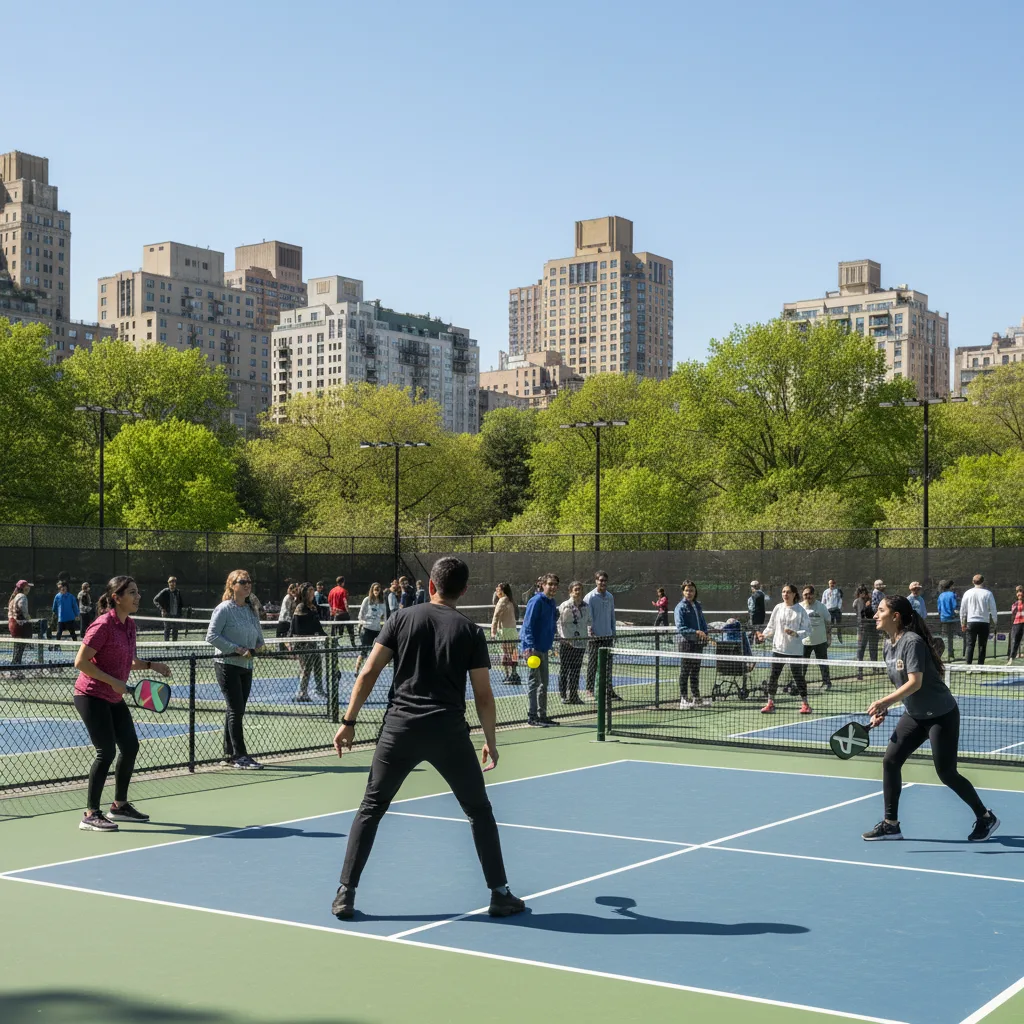
Central Park Welcomes Pickleball Courts at Wollman Rink for 2026 Season
Wollman Rink in Central Park now hosts 14 permanent pickleball courts for the 2026 season, offering new recreational opportunities for all ages. This transformation embraces the sport's growing popularity and expands park activities.
A Guide to Central Park's Top Activities and Best Things to Do in 2026
Discover the best things to do in Central Park, NYC, with our comprehensive 2026 guide to iconic landmarks, activities, and hidden gems for visitors.
A Guide to What to Know About the Vatican Obelisk in Central Park 2026
Discover what to know about the Vatican Obelisk (Cleopatra's Needle) in Central Park, its history, journey to NYC, and where to find it in 2026.
Central Park Woman Found Dead Near Boathouse Gazebo
A woman was found stabbed to death in a Central Park gazebo near the Boathouse on Sunday, prompting an active NYPD homicide investigation.
Queens Student Arrested for Bringing Gun to High School
A Queens student was arrested for bringing a gun to high school, prompting immediate law enforcement action and raising school safety concerns.

NYC Mayor Mamdani Booed at Union Square October 7 Vigil
Mayor Mamdani faced boos and protests at a Union Square vigil Thursday marking the Oct. 7 attacks, highlighting deep community divisions in NYC.