


New York Cycle Club Files Lawsuit Against City Over Central Park's 15 MPH Bike Speed Limit

New York, NY – The New York Cycle Club (NYCC) has initiated legal action against the City of New York, directly challenging the 15-mile-per-hour bike speed limit currently enforced within Central Park. The lawsuit, as reported by Streetsblog NYC, contends that the established speed regulation poses a significant threat to competitive cycling and also negatively impacts casual riders utilizing the iconic urban green space.
The legal filing stems from ongoing debates regarding cycling regulations in Central Park, a popular destination for both recreational and serious cyclists. The NYCC argues that the stringent speed cap impedes the ability of competitive cyclists to train effectively and diminishes the experience for many other park users. This legal challenge underscores a broader tension between ensuring safety for all park-goers and accommodating the diverse needs of different user groups.
The 15 mph speed limit was implemented as part of a broader effort by the New York City Department of Parks and Recreation to enhance safety for pedestrians, joggers, and cyclists alike within the park's shared pathways. However, the NYCC asserts that the blanket application of this limit across the park's entire loop, especially in sections where conditions might allow for higher speeds without compromising safety, is unduly restrictive and unconstitutional for its members who train there. The club's representation posits that the regulation stifles the legitimate use of a public space for athletic pursuits.
Legal Grounds and Cyclist Concerns
The New York Cycle Club's lawsuit centers on the argument that the 15 mph speed limit constitutes an "existential threat" to competitive cycling activities in Central Park. For many club members, the park's loop serves as a critical training ground, particularly given its consistent terrain and designated cycling lanes. Adhering strictly to the 15 mph limit, the club claims, makes it nearly impossible to conduct effective interval training, maintain race-pace speeds, or prepare adequately for competitive events. This effectively curtails a fundamental aspect of their sport.
Beyond competitive concerns, the lawsuit also highlights the impact on casual riders. While seemingly aimed at slowing down faster cyclists, the NYCC suggests that the limit can create frustrating conditions for regular commuters or recreational riders who might naturally exceed 15 mph on certain downhill stretches or open sections of the loop. The constant need to monitor speed can detract from the enjoyment and flow of cycling, turning a leisurely activity into one fraught with vigilance against potential violations. The legal challenge seeks to re-evaluate the appropriateness and enforcement mechanisms of the current speed regulation, pushing for a solution that balances safety with the practicalities of cycling in a diverse urban environment.
Broader Implications for Park Management and User Rights
The outcome of the New York Cycle Club's lawsuit could have far-reaching implications for how Central Park, and potentially other urban parks, are managed in terms of user regulations. If the court finds in favor of the NYCC, it could prompt a re-assessment of speed limits and usage policies, potentially leading to differentiated rules for various sections of the park or for specific user groups. This could involve exploring options such as designated training times, variable speed limits based on park zones, or enhanced educational campaigns rather than strict blanket enforcement.
Conversely, if the city's current policy is upheld, it would reinforce the existing framework prioritizing a universal safety standard across the park. Such a ruling might further solidify the city's authority to implement broad regulations to manage congestion and prevent accidents in high-traffic public spaces. Regardless of the judicial outcome, the lawsuit brings to the forefront the ongoing challenge faced by urban park administrators: how to create an inclusive environment that safely accommodates the wide array of activities and expectations from millions of annual visitors, from leisurely strolls to high-intensity athletic training. The legal battle highlights the need for continuous dialogue and adaptive policy-making to ensure Central Park remains accessible and enjoyable for everyone.
Key Points:
- The New York Cycle Club has filed a lawsuit against the City of New York.
- The lawsuit challenges the 15 mph bike speed limit in Central Park.
- NYCC argues the limit is an "existential threat" to competitive cyclists and impacts casual riders.
- Streetsblog NYC initially reported on the legal challenge.
- The dispute highlights tensions between safety regulations and diverse park user needs.
Related Articles
More in Sports & Recreation →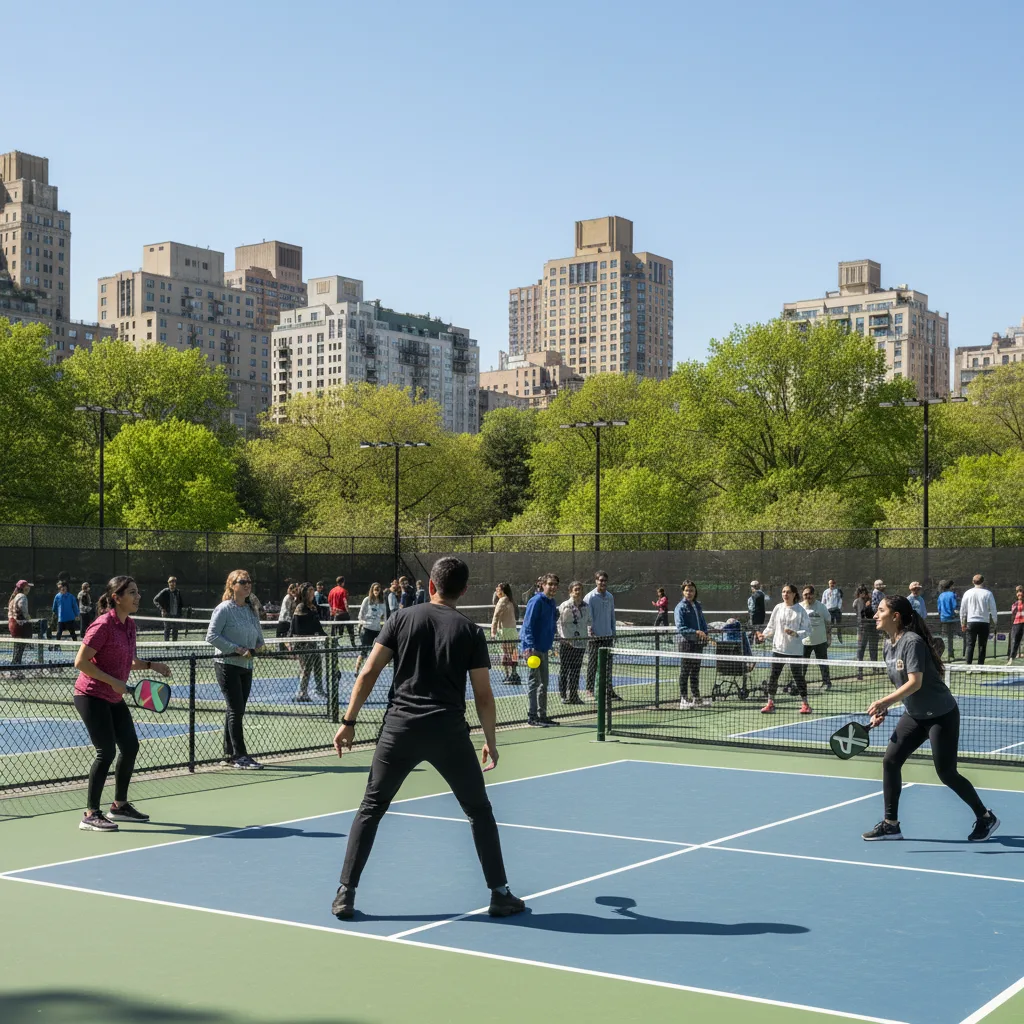
Central Park Welcomes Pickleball Courts at Wollman Rink for 2026 Season
Wollman Rink in Central Park now hosts 14 permanent pickleball courts for the 2026 season, offering new recreational opportunities for all ages. This transformation embraces the sport's growing popularity and expands park activities.
A Guide to Central Park's Top Activities and Best Things to Do in 2026
Discover the best things to do in Central Park, NYC, with our comprehensive 2026 guide to iconic landmarks, activities, and hidden gems for visitors.
A Guide to What to Know About the Vatican Obelisk in Central Park 2026
Discover what to know about the Vatican Obelisk (Cleopatra's Needle) in Central Park, its history, journey to NYC, and where to find it in 2026.
Central Park Woman Found Dead Near Boathouse Gazebo
A woman was found stabbed to death in a Central Park gazebo near the Boathouse on Sunday, prompting an active NYPD homicide investigation.
Queens Student Arrested for Bringing Gun to High School
A Queens student was arrested for bringing a gun to high school, prompting immediate law enforcement action and raising school safety concerns.

NYC Mayor Mamdani Booed at Union Square October 7 Vigil
Mayor Mamdani faced boos and protests at a Union Square vigil Thursday marking the Oct. 7 attacks, highlighting deep community divisions in NYC.