


Mayor Faces Pushback from Ken Griffin on Pied-à-terre Tax

NEW YORK — Billionaire Ken Griffin, CEO of Citadel, has openly criticized New York City's proposed pied-à-terre tax, creating significant political turbulence for Mayor Eric Adams' administration. His remarks, made during a recent CNBC interview, have ignited a renewed debate over taxation policies affecting high-net-worth individuals in the city.
"The mayor of New York is getting pushback from billionaire Ken Griffin and his company called Citadel," CNBC reported. "Today, we're taxing them. This pied-à-terre tax..." These comments underscore a growing tension between city hall's fiscal strategies and the concerns of the financial sector.
Griffin's Critique of NYC Tax Policy
Ken Griffin, known for his extensive investments in New York City real estate, including a record-breaking $238 million penthouse at 220 Central Park South, voiced strong opposition to the proposed tax. He argued that such levies could deter investment and ultimately harm the city's economic vitality.
During his interview with CNBC's Sara Eisen, Griffin explicitly stated his concerns about the increasing tax burden on affluent residents and businesses. He suggested that punitive taxes could drive wealthy individuals and corporations to relocate, impacting the city's tax base and employment opportunities.
"New York City needs to be careful not to push away the very people and businesses that contribute so much to its economy," Griffin told Eisen. "A pied-à-terre tax, while seemingly aimed at the super-rich, sends a chilling message about the city's commitment to fostering a competitive business environment." This sentiment resonates with some members of the business community.
Mayoral Administration Defends Fiscal Strategy
Mayor Adams' office quickly responded to Griffin's comments, defending the proposed tax as a necessary measure to generate revenue for critical public services. The administration argues that a pied-à-terre tax would ensure that part-time residents, who benefit from city services, contribute fairly to their upkeep.
Deputy Mayor for Economic Development, Maria Sanchez, issued a statement reinforcing the city's position. "Our administration is committed to creating a fairer, more equitable New York," Sanchez explained. "The proposed pied-à-terre tax is a responsible step to ensure that those who can afford to contribute more to our city's infrastructure and services do so." The mayor has consistently emphasized the need for new revenue streams to address budget shortfalls and fund social programs.
The proposed tax typically targets non-primary residences valued over a certain threshold, potentially bringing in hundreds of millions of dollars annually. Advocates for the tax point to its potential to fund initiatives like affordable housing, public transportation improvements, and Central Park Conservancy initiatives. For a broader overview of Central Park related news, one can consult various sources, including NewsNow's Central Park aggregation.
Economic Implications and Future of NYC Finance
The debate over the pied-à-terre tax highlights broader questions about New York City's long-term fiscal health and its appeal to high-value residents and businesses. Economists are divided on the potential impact of such a tax, with some predicting minimal exodus and others warning of significant capital flight.
A report by the New York Fiscal Policy Institute estimates that a well-designed pied-à-terre tax could generate between $200 million and $600 million annually. Conversely, the Partnership for New York City suggests that increased taxes could lead to a net loss of wealthy residents, ultimately reducing overall tax revenues.
Discussions are ongoing in the City Council regarding the specifics of the tax proposal, including its rate structure and thresholds. The outcome of this legislative process will undoubtedly influence future economic development strategies and the city's financial landscape. More information on local governance and real estate trends can be explored through various local news platforms, such as FOX 5 New York's Central Park tag.
FAQs on the Pied-à-terre Tax Debate
What is a pied-à-terre tax? A pied-à-terre tax is a levy on non-primary residences, typically luxury apartments or homes, owned by individuals who do not reside in New York City for the majority of the year. It's often proposed as a way to generate revenue from wealthy part-time residents.
Why is Ken Griffin opposing the tax? Ken Griffin, CEO of Citadel, opposes the tax because he believes it creates a hostile tax environment for high-net-worth individuals and businesses. He argues it could deter investment and lead to an exodus of wealthy residents from New York City.
What is the Mayor's administration's justification for the tax? Mayor Eric Adams' administration argues the pied-à-terre tax is a fair way to generate much-needed revenue for public services, such as affordable housing and infrastructure improvements. They maintain that part-time residents should contribute their share to city operations.
What is the potential revenue from a pied-à-terre tax? Estimates vary, but reports from organizations like the New York Fiscal Policy Institute suggest such a tax could generate hundreds of millions of dollars annually, ranging from $200 million to $600 million, depending on its specific structure.
Related Articles
More in Urban Policy & Development →
NYC Mayor Mamdani Booed at Union Square October 7 Vigil
Mayor Mamdani faced boos and protests at a Union Square vigil Thursday marking the Oct. 7 attacks, highlighting deep community divisions in NYC.

NYC Homeless Encampments Spotted Across Manhattan, Raising Concerns
Multiple homeless encampments have been spotted across Manhattan, raising significant concerns about urban policy and public safety. City officials are under pressure to address the growing homelessness crisis.

Safety Advocate Blames Park Redesign for Rising Central Park Cyclist Crashes
Safety advocates blame recent Central Park redesigns for a pedestrian's death and rising cyclist crashes, calling for urgent review of infrastructure.
NYC DOT Advises Central Park Area Traffic Disruptions September 27
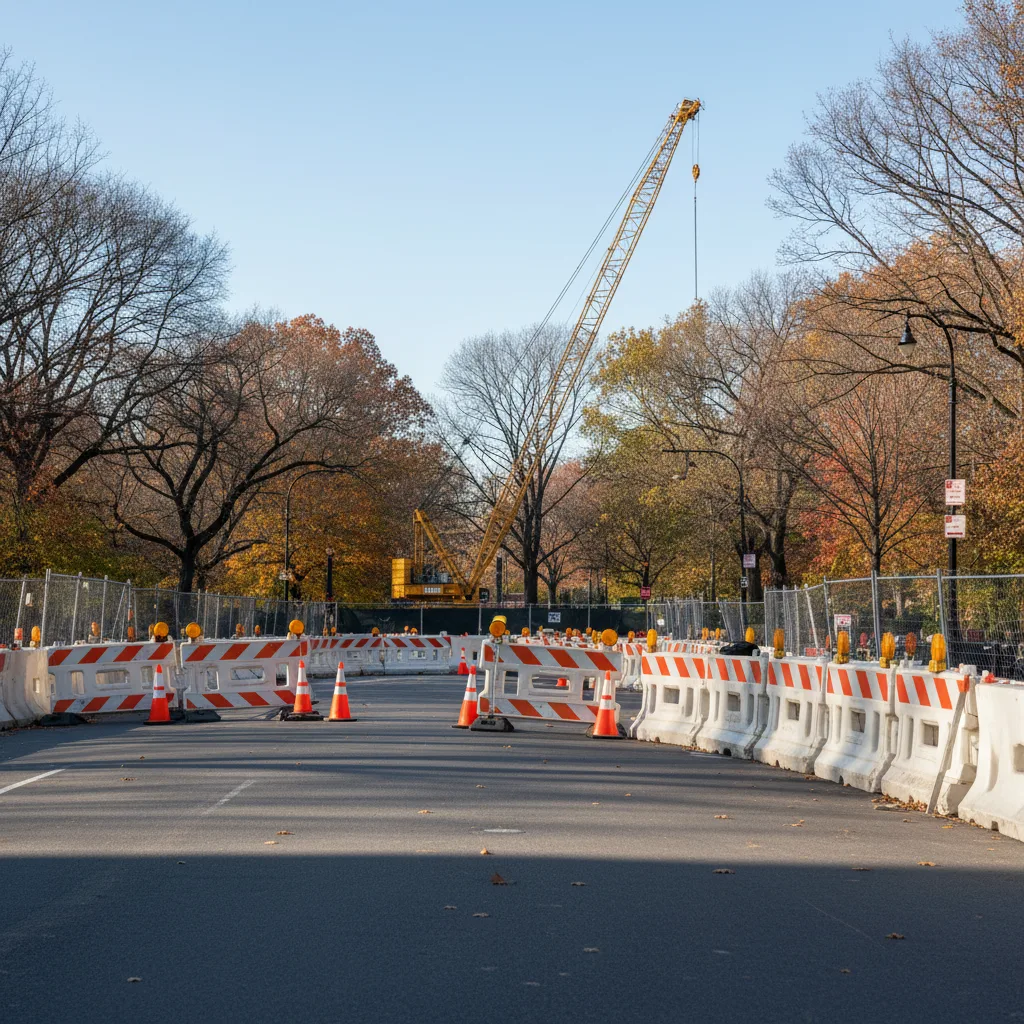
NYC DOT issued advisories for major traffic disruptions near Central Park on September 27, 2026, due to a parade and crane operations. Expect delays.

Davis Center at Harlem Meer Unveils State-of-the-Art Facilities
The new Davis Center at the Harlem Meer in Central Park's north end now features a state-of-the-art pool, ice rink, and multi-use turf field, enhancing community recreational options.

NYC City Record Confirms September 21, 2026, Publication Schedule
The NYC City Record confirmed its September 21, 2026, publication schedule, detailing administrative notices, procurement, and public hearings. This ensures transparency for municipal operations and public access to vital city information.