



Environmental Conservation & Park Management
Sarah Lee
|March 26, 2026
NEW YORK — The Central Park Conservancy unveiled a series of ambitious new eco-friendly initiatives aimed at enhancing the park's biodiversity, improving visitor experience, and combating the effects of climate change. These programs, set to roll out throughout 2026, underscore the Conservancy's commitment to sustainable urban park management.
The announcement, made from the heart of Central Park, detailed plans ranging from advanced water conservation techniques to expanded native plant cultivation. These efforts are designed to ensure the park remains a vibrant urban oasis for generations to come.
Enhancing Biodiversity Through Native Plantings
A cornerstone of the new initiatives is the significant expansion of native plant cultivation across Central Park. By reintroducing indigenous species, the Conservancy aims to support local wildlife populations, including birds, insects, and small mammals.
These plantings will contribute to a more resilient ecosystem, better able to withstand environmental stressors. The program will involve a combination of expert horticulturalists and community volunteers in planting and maintenance efforts.
Advanced Water Conservation Strategies
Recognizing the importance of water as a critical resource, the Conservancy is implementing cutting-edge water conservation technologies. These include smart irrigation systems that adjust based on weather conditions and soil moisture levels, reducing waste.
Plans also involve the rehabilitation of existing water features and the exploration of rainwater harvesting systems. These strategies are expected to significantly decrease the park’s overall water consumption, aligning with broader citywide sustainability goals.
Community Engagement and Educational Programs
Integral to the success of these eco-friendly initiatives is robust community involvement. The Conservancy will launch new educational programs designed to inform park visitors and local residents about sustainable practices and the importance of conservation.
Volunteer opportunities will be expanded, allowing more New Yorkers to directly participate in the park's ecological stewardship. These programs aim to foster a deeper connection between the community and Central Park's natural environment.
Combating Climate Change at the Local Level
The initiatives represent a proactive approach to mitigating the effects of climate change within an urban setting. By increasing green infrastructure and improving ecological resilience, Central Park can serve as a model for other city parks worldwide.
Efforts to sequester carbon through strategic tree planting and soil health improvements are also part of the comprehensive plan. The Conservancy believes that even local actions can contribute to global environmental solutions.
Long-Term Vision for a Sustainable Central Park
The 2026 eco-friendly initiatives are part of a long-term vision for Central Park that prioritizes ecological health and visitor enjoyment. Future plans may include further expansion of renewable energy sources within park facilities and continued research into urban biodiversity.
The Conservancy is committed to adapting its strategies as new environmental challenges and technological advancements emerge. This adaptive management approach ensures that Central Park remains a leading example of urban park sustainability.
Frequently Asked Questions About Central Park's Eco-Initiatives
Many Central Park visitors and residents are curious about the Conservancy's new eco-friendly initiatives. The core focus is on enhancing the park's natural environment through several key programs. These include significantly increasing native plant species to boost local biodiversity and implementing advanced water conservation techniques, such as smart irrigation. The Conservancy is also launching new educational programs and expanding volunteer opportunities to involve the community in these efforts. The overarching goal is to combat climate change at a local level, making Central Park a more resilient and sustainable urban oasis for the future. Residents can get involved by volunteering for planting events or participating in educational workshops.
TOP 7 STORIES
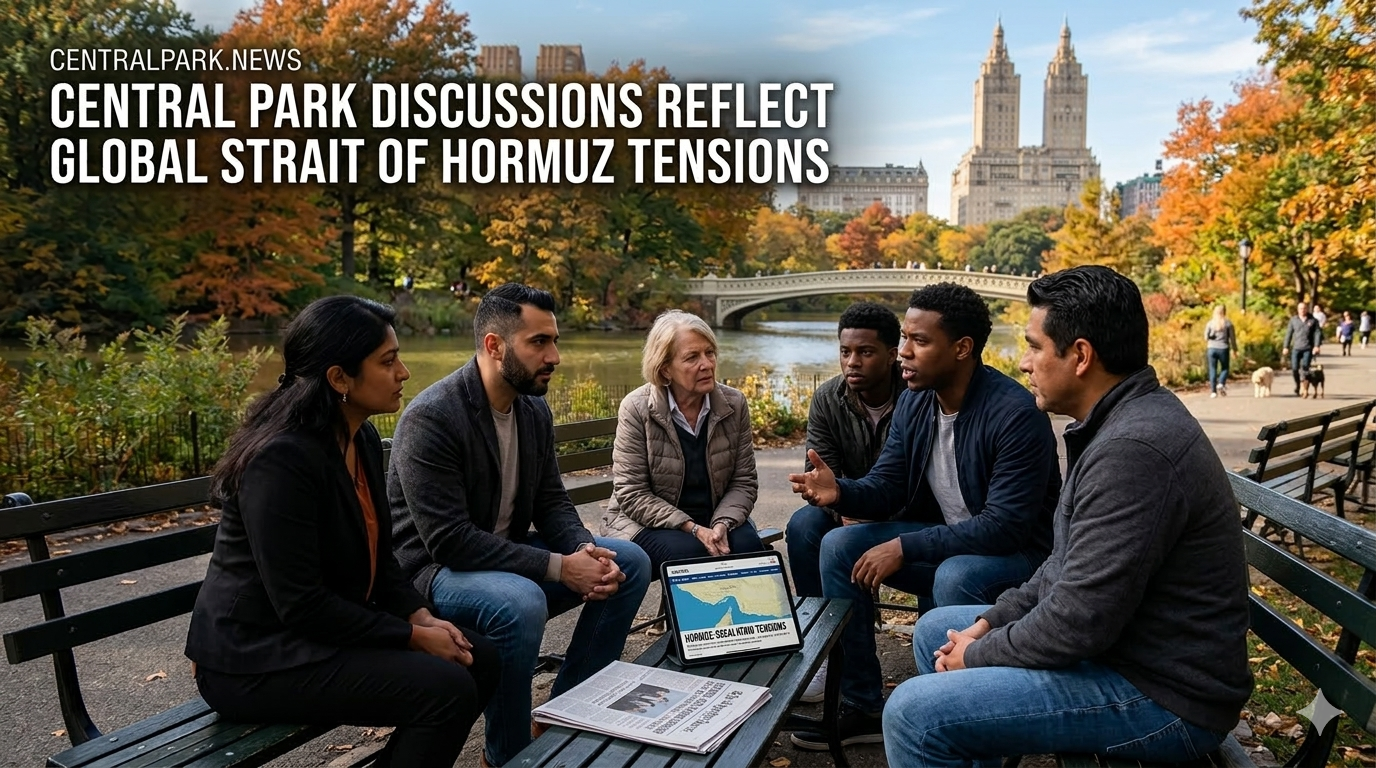
Central Park Discussions Reflect Global Strait of Hormuz Tensions
Sarah Lee
|March 17, 2026
NEW YORK — Discussions among Central Park visitors and residents have increasingly turned to global geopolitical tensions, particularly regarding the critical Strait of Hormuz and the international response to its security. With Iran rejecting ceasefire negotiations and maintaining a blockade of the waterway, the diplomatic friction over protecting this vital shipping lane has become a prominent topic in local conversations. The global situation, amplified by President Trump's call for NATO involvement, has resonated deeply within Manhattan's diverse communities. Concerns about international stability and the implications for global trade and alliances are frequently voiced in coffee shops, public spaces, and even within the park itself. Geopolitical Implications Debated Across Manhattan Manhattan residents, from the Financial District to the Upper East Side, are openly debating the geopolitical implications of the standoff in offices and transit hubs. There is particular concern about how sustained international disagreement over the protection of the Strait of Hormuz could prolong the conflict and destabilize energy markets further. Political science experts at Columbia University note that New York City, as a global financial and cultural hub, is acutely sensitive to international crises. The interconnectedness of global affairs means that events thousands of miles away can directly impact the daily lives and economic outlook of its residents. Allied Refusal and Its Impact on Local Sentiment President Trump's request for NATO and other oildependent nations to help protect the Strait of Hormuz has met with varied responses, notably the reluctance of allies like the UK, Japan, and Australia to commit naval vessels. This refusal has created significant friction in the international response and is a focal point of discussion. Central Park area residents and tourists are discussing the significance of allied nations refusing Trump's request, with many expressing frustration that diplomatic solutions appear stalled. Some question whether this signals a deeper fracture in the Western alliance during this critical international crisis, a sentiment echoed in various public forums and neighborhood meetings. Historical Context of International Cooperation and Conflict The current diplomatic friction evokes historical instances where international alliances have faced severe tests over resource security and strategic waterways. Past conflicts and diplomatic impasses have often shaped global power dynamics and economic stability, lessons not lost on many New Yorkers familiar with world history. The Strait of Hormuz itself has been a flashpoint for centuries, underscoring its enduring strategic importance. Understanding its history helps frame the current crisis for those trying to comprehend the complex interplay of international relations, economics, and military strategy, as explored by analysts on . Economic and Security Concerns for a Global City Beyond the diplomatic intricacies, the immediate and longterm economic and security concerns for New York City are palpable. Any prolonged disruption to shipping in the Strait of Hormuz could have cascading effects on global supply chains, impacting everything from consumer goods to industrial raw materials. For a city so dependent on international trade and global markets, the stability of key maritime routes is paramount. Local businesses and industries, particularly those involved in import/export, are closely monitoring the situation for potential disruptions that could affect their operations and the broader city economy. Community Views and the Search for Diplomatic Solutions The ongoing discussions within Central Park reflect a broader public yearning for peaceful and effective diplomatic solutions. Many New Yorkers, proud of their city's role as a global melting pot, advocate for deescalation and international cooperation to resolve the crisis without further conflict. The debate highlights the complexity of modern foreign policy, where the actions of distant nations and global leaders have direct and often immediate consequences on local communities. Residents hope that concerted international efforts can still avert a wider conflict and restore stability to critical global arteries. Frequently Asked Questions About the Strait of Hormuz Crisis Why is the Strait of Hormuz so important to global stability? The Strait of Hormuz is a narrow waterway through which approximately onefifth of the world's total oil supply passes daily. Its strategic location at the mouth of the Persian Gulf makes it crucial for global energy markets, and any disruption can cause significant spikes in oil prices and economic instability worldwide, as discussed by . How does the allied refusal to join NATO efforts impact the situation? The refusal of key allies like the UK, Japan, and Australia to commit naval vessels to protect the Strait of Hormuz creates diplomatic friction and weakens a unified international front. This lack of cohesion can embolden adversaries and complicate efforts to deter further Iranian actions, prolonging the crisis and its associated global risks. What are Central Park area residents concerned about regarding this crisis? Central Park area residents and tourists are concerned about the broader geopolitical destabilization, the potential for wider conflict, and its longterm economic consequences, including continued rises in gas prices and inflation. They are also debating the effectiveness of international diplomacy and the integrity of Western alliances in responding to such significant global challenges, reflecting the city's engaged and informed populace.
US Officials Condemn Snowball Attack Injuring NYPD Officers

US Officials Condemn Snowball Attack Injuring NYPD Officers in Central Park, February 25, 2026
Sarah Lee
|February 25, 2026
NEW YORK, NY – United States officials on Tuesday, February 25, 2026, issued a strong condemnation following an incident in Central Park where New York Police Department (NYPD) officers were reportedly injured after being pelted with snowballs by a crowd. The incident, which occurred in the wake of a significant blizzard that impacted the city, has raised concerns about public safety and respect for law enforcement during large gatherings in public spaces. The specific details of the confrontation remain under investigation, but initial reports indicate that officers responding to a situation within Central Park were met with aggressive behavior, escalating from thrown snowballs to objects that caused injury. This incident follows days of a major winter storm that left Central Park and much of New York City blanketed in snow, attracting large numbers of people to the park for recreational activities. The condemnation from US officials underscores the seriousness with which authorities view assaults on police personnel. Investigation Underway into Assault on Officers The NYPD has launched a full investigation into the snowball attack that led to injuries among its officers. Police spokespersons stated that multiple individuals are being sought in connection with the incident, and charges could range from assault to harassment of law enforcement officers. Authorities are reviewing any available surveillance footage and eyewitness accounts to identify those responsible. This investigation aims to send a clear message that such behavior will not be tolerated, particularly when it jeopardizes the safety of first responders. The department also confirmed that the injured officers received medical attention and are recovering. The incident highlights the unpredictable challenges officers face, even in seemingly benign postblizzard environments. Community Leaders Call for Respect and Safety In the aftermath of the attack, several community leaders and advocacy groups have joined US officials in condemning the actions of the crowd. Calls for greater respect for law enforcement and a renewed emphasis on public safety in communal spaces like Central Park have been voiced. Representatives from various organizations emphasized the importance of maintaining peaceful interactions between the public and police, particularly during periods of high public activity such as postblizzard recreation. They urged citizens to report any information related to the incident and stressed the need for a collaborative approach to ensure that Central Park remains a safe and enjoyable environment for everyone, free from violent confrontations against any individual, including those serving in public safety roles. The incident serves as a regrettable stain on an otherwise joyful period of winter recreation for many New Yorkers. Key Points: US officials condemned a snowball attack on NYPD officers in Central Park on February 25, 2026. The incident resulted in injuries to police personnel. The NYPD has initiated an investigation to identify the individuals responsible. Community leaders have joined the condemnation, advocating for respect and public safety. The attack occurred during a period of high public activity in Central Park following a major blizzard.
Central Park Records 9.3 Inches Snow, NYC Schools

Central Park Records 9.3 Inches Snow, NYC Schools Closed Amid February 23 Winter Storm
Sarah Lee
|February 23, 2026
Central Park officially recorded 9.3 inches of snowfall on February 23, 2026, as a severe winter storm paralyzed the New York metropolitan area. This significant accumulation contributed to widespread disruptions, including the closure of all New York City public schools and the grounding of numerous flights. The storm's impact extended throughout the region, with Staten Island experiencing even higher totals at 14.0 inches, highlighting the severity and variability of the blizzard. The substantial snowfall in Central Park transformed the urban oasis into a deeply snowcovered landscape, impacting daily routines and presenting significant challenges for city infrastructure. The decision to close schools underscored the hazardous travel conditions and the priority placed on student and staff safety during the intense weather event. Widespread Closures and Transportation Disruptions The severe winter storm brought New York City to a near standstill, with consequences felt across multiple sectors. All public schools within the five boroughs were closed for the day, affecting millions of students and their families. This decision was made proactively to prevent commuters from facing dangerous roads and sidewalks. School officials cited concerns over icy conditions, reduced visibility, and the logistical challenges of bus transportation in heavy snow. Beyond schools, transportation networks faced severe disruptions. Airports serving the metropolitan area, including JFK, LaGuardia, and Newark Liberty International, reported hundreds of flight cancellations and delays, effectively grounding air travel. Major highways and local roads became treacherous, with reduced speed limits and reports of stranded vehicles. The Metropolitan Transportation Authority (MTA) also scaled back services on various subway and bus lines, further complicating movement for essential workers and those attempting to navigate the city. Central Park Conditions and Metropolitan Impact Central Park's 9.3inch snowfall total was among the highest recorded within Manhattan, contributing to the picturesque yet formidable winter scenery. The deep snow made typical park activities impossible and rendered many paths impassable. Park maintenance crews, once conditions allowed, began extensive operations to clear primary walkways and ensure the safety of critical infrastructure, such as bridges and natural features. Comparatively, Staten Island's 14.0 inches highlighted the uneven distribution of snowfall across the metropolitan area, with coastal regions often receiving heavier accumulations during nor'easters. The combined impact of deep snow in Central Park, widespread school closures, and paralyzed transportation underscored the profound effect of the February 23, 2026, storm on the daily life and operations of one of the world's largest cities. The event served as a stark reminder of winter's capacity to disrupt urban environments, necessitating coordinated emergency responses and resilient community planning. Key Points: Central Park recorded 9.3 inches of snowfall on February 23, 2026, during a severe winter storm. All New York City public schools were closed due to the hazardous blizzard conditions. Staten Island received an even higher accumulation, totaling 14.0 inches. The severe weather led to widespread flight groundings across the metropolitan area's airports. Transportation networks experienced significant disruptions, including reduced public transit services. The storm caused extensive operational challenges across New York City and its surrounding areas.
Central Park, February 2026: Key Visual Element in

Central Park, February 2026: Key Visual Element in Projected Manhattan Skyline Documentation
Sarah Lee
|February 21, 2026
Central Park remains an unparalleled landmark in New York City's urban landscape, a fact poised to be highlighted in various visual documentations of the city's skyline, including projected views for February 2026. As attention turns to capturing Manhattan's intricate beauty, particularly through personalized perspectives like those offered in an upcoming YouTube compilation focusing on February 21, 2026, the 843acre Central Park will inevitably serve as a central, verdant anchor amidst the towering steel and glass. Its sprawling, meticulously designed terrain offers a stark, natural contrast that is fundamental to the aesthetic appeal and spatial understanding of the city from any vantage point. The park’s consistent presence across the midtown landscape ensures it is not merely a background feature but an active participant in defining the city's visual narrative. Even in the depths of winter, its mature tree canopy, frozen waterways, and open fields contribute significantly to the dynamic texture of the skyline, whether viewed from a distant highrise or an aerial perspective. This enduring visual prominence underscores Central Park’s integral role not just as a recreational haven but as an essential element of New York’s global identity. Central Park's Enduring Visual Landmark Status From its inception in the mid19th century, Central Park was designed to be an integral part of New York City’s identity, offering both respite and a monumental aesthetic statement. Its carefully sculpted topography, which includes rolling hills, expansive meadows, and dense woodlands, provides a naturalistic counterpoint to the gridlike urban development surrounding it. This deliberate design ensures that from virtually any highrise perspective or aerial shot of the Manhattan skyline, Central Park instantly registers as a vast, green lung—a constant against the everchanging architectural tapestry. For those capturing or viewing the city in February 2026, the park’s sheer scale and distinct boundary will frame many blocklevel views, especially those in Midtown, the Upper West Side, and the Upper East Side. Its presence is a geographical marker, helping viewers orient themselves within the dense urban fabric. This makes Central Park not just a scenic element but a crucial navigational and contextual reference point, solidifying its status as an enduring and unmistakable landmark that transcends seasonal variations. Winter Aesthetics and Public Accessibility in February 2026 While Central Park's vibrant spring and summer hues are widely celebrated, its winter aesthetic in February offers a different, yet equally compelling, visual experience. During February 2026, the park is likely to present a muted, serene palette, characterized by bare deciduous trees revealing their intricate branch structures, the potential for snowcovered landscapes, and the crisp, clear air typical of a New York winter. Features like the frozen surface of the Pond near Grand Army Plaza or the Bethesda Terrace might appear with a stark, quiet beauty. Despite the colder temperatures, Central Park remains fully accessible and functional throughout February. Visitors can engage in activities such as ice skating at Wollman Rink or explore the park's many pathways, which offer peaceful walks often less crowded than in warmer months. The conservancy ensures that the park’s pathways are maintained, allowing for continuous public enjoyment. This yearround accessibility means that any visual documentation of the city, including future skyline views in February 2026, will consistently portray Central Park as a living, breathing component of Manhattan, continuously serving its community and contributing to the city's dynamic visual character. Key Points: Central Park remains a crucial visual element in any documentation of the Manhattan skyline, including those projected for February 2026. Its 843 acres provide a vital natural contrast to the dense urban environment, defining the city's iconic visual identity. The park's unique design and historical significance ensure its status as an enduring and unmistakable landmark from aerial or highrise perspectives. In February, Central Park presents a distinct winter aesthetic, offering serene views while remaining fully accessible for public enjoyment. The park's yearround accessibility and visual prominence make it a consistent and integral part of New York City's public and visual life.
.png&w=3840&q=70&dpl=dpl_9inNHuqLcX565hr2Y5rfaSewsvFG "Displayed on viewports 640px and wider")